The next book · in preparation
Beyond Superjustice
A new collection of papers responding to Superjustice
and expanding its analysis, one for each of its ten chapters.
Edited by Samuel I. Becher, Benjamin Alarie, and Kwan Ho Lau.
The papers will be discussed at a workshop at the City University of Hong Kong in March 2027 and presented at a symposium at the University of Toronto in May 2027. They will be published first as a special issue of the University of Toronto Law Journal and then collected in a book from University of Toronto Press.
The Project
Beyond Superjustice is a collection of new papers that respond to Superjustice and take its analysis further. Each of the book's ten chapters is the starting point for one paper, written by a scholar or a team of scholars.
The editors are Samuel I. Becher (City University of Hong Kong), Benjamin Alarie (University of Toronto), and Kwan Ho Lau (Singapore Management University).
The contributors are listed alphabetically. Event programs and publication dates will be announced.
The Contributors
Nikita Aggarwal is an Associate Professor at the University of Miami School of Law. She studies financial and consumer markets under technological change, drawing on technology law, consumer finance, contract law, economics, and computer science. Nikita AggarwalUniversity of Miami School of Law
Abdi Aidid is an Assistant Professor at Jackman Law, University of Toronto and the Canada Research Chair in Artificial Intelligence and Access to Justice. His research examines civil adjudication, privacy, and the intersection of law and technology. Abdi AididJackman Law, University of Toronto
Samuel I. Becher is a Professor at the City University of Hong Kong School of Law. His interdisciplinary scholarship focuses on consumer protection and contract law, including disclosure, standard-form contracting, and behavioral insights. Samuel I. BecherSchool of Law, City University of Hong Kong
Anthony J. Casey is the Donald M. Ephraim Professor of Law and Economics at the University of Chicago Law School and Faculty Director of its Center on Law and Finance. His research examines the intersection of finance and law, including corporate bankruptcy and business law, and how technological innovation is changing the foundations of the legal system. Anthony J. CaseyUniversity of Chicago Law School
Leon Vincent Chan is a Presidential Assistant Professor at the City University of Hong Kong School of Law. His research focuses on family and medical law, particularly legal questions involving children’s welfare.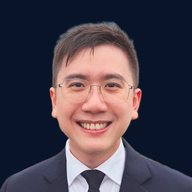 Leon Vincent ChanSchool of Law, City University of Hong Kong
Yang Chen is an Assistant Professor at the City University of Hong Kong School of Law. His research focuses on intellectual property, particularly trade secrets, unfair competition, the right of publicity, trademarks, and copyright. Yang ChenSchool of Law, City University of Hong Kong
Ori Katz is a Lecturer at Bar-Ilan University’s Faculty of Law. He studies contract law, behavioral law and economics, empirical legal studies, judicial discretion, and decision-making, using theoretical, observational, and experimental methods. Ori KatzYaacov Herzog Faculty of Law, Bar-Ilan University
Kwan Ho Lau is an Associate Professor at Singapore Management University’s Yong Pung How School of Law. His research focuses on contract and private law, judicial decision-making in common-law systems, and the development of the legal profession. Kwan Ho LauYong Pung How School of Law, Singapore Management University
Anthony Niblett is Professor and Donald Harrison Chair in AI and Technology at Jackman Law, University of Toronto. His research examines artificial intelligence, innovation, contracts, competition policy, and judicial behaviour. Anthony NiblettJackman Law, University of Toronto
Jeannie Paterson is a Professor at Melbourne Law School and Director of the University of Melbourne’s Centre for Artificial Intelligence and Digital Ethics. Her research focuses on consumer protection, contract law, and the regulation, safety, and liability of AI systems. Jeannie PatersonMelbourne Law School, University of Melbourne
Nathalie A. Smuha is an Assistant Professor at Jackman Law, University of Toronto. Her research examines law, philosophy, and technology, particularly the effects of digital technologies on human rights, democracy, and the rule of law. Nathalie A. SmuhaJackman Law, University of Toronto
Lauren E. Willis is Professor of Law and Centennial Chair in Consumer Law at Loyola Law School, Los Angeles. Her scholarship concentrates on the intersection of consumer psychology, markets, and law, including consumer finance, privacy, contracts, and disclosure, and develops a performance-based approach to consumer law. Lauren E. WillisLoyola Law School, Los Angeles
Tomohiro Yoshimasa is a Professor at Kyoto University’s Graduate School of Law. His research focuses on contract law and the foundations of private law, from the doctrines of changed circumstances and impossibility to the personalization of default rules. Tomohiro YoshimasaGraduate School of Law, Kyoto University
Eyal Zamir is the Augusto Levi Professor of Commercial Law at the Hebrew University of Jerusalem and a former dean of its Faculty of Law. His scholarship spans contract and commercial law, behavioral law and economics, empirical legal studies, and the philosophical foundations of private law. Eyal ZamirFaculty of Law, Hebrew University of Jerusalem
Tal Zarsky is Dean and Professor of Law at the University of Haifa. His research addresses information privacy, cybersecurity, internet policy, telecommunications, algorithmic decision-making, online commerce, and private-law theory. Tal ZarskyFaculty of Law, University of Haifa
The Ten Chapters
The papers follow the structure of Superjustice, with one paper for each chapter.
Part IThe Foundations of Superjustice
- A Paradigm Shift
- Ten Pillars of Legal Dysfunctionality
- Toward Hybrid Legal Decentralization
- From Gridlock to Dynamism
Part IIImplementation and Realization of Superjustice
- The New Code of Justice
- Pervasive Justice
- Educating for Superjustice
Part IIIFuture Directions and Challenges
- The Future of Justice Work
- CRISPR-J in the Age of Superjustice
- Charting Superjustice
The Publication Plan
The papers will be published in two stages.
- A special issue of the University of Toronto Law Journal, with the papers presented at the Toronto symposium.
- A book collecting the papers, from University of Toronto Press, under the working title Beyond Superjustice.
Superjustice itself is available now in print, ebook, and audio; see the book page for formats and sellers.
Two Events
Two events are scheduled: a workshop in Hong Kong in March 2027 and a symposium in Toronto in May 2027. Both are also on the events page.
- Workshop City University of Hong Kong Two-day academic workshop, hosted by the School of Law.
- Symposium University of Toronto University of Toronto Law Journal two-day symposium, hosted by the Faculty of Law at the Jackman Law Building, 78 Queen's Park, with a public event and reception on the afternoon of 25 May.